Best Time to Check Blood Pressure: Morning or Evening?
When to measure blood pressure at home: morning and evening, before or after meals and pills, how many readings and for how many days. Based on ESH and AHA advice.
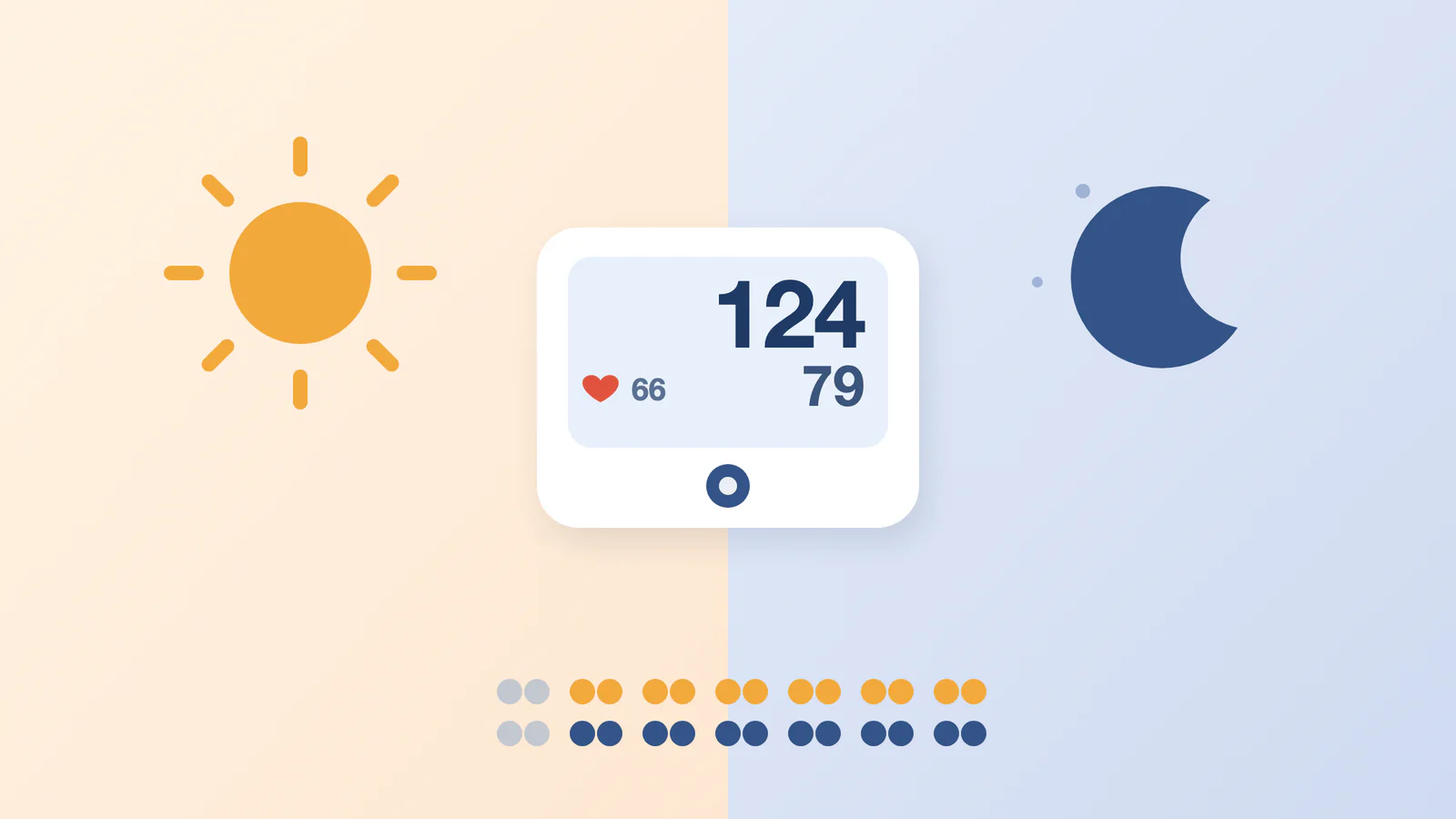
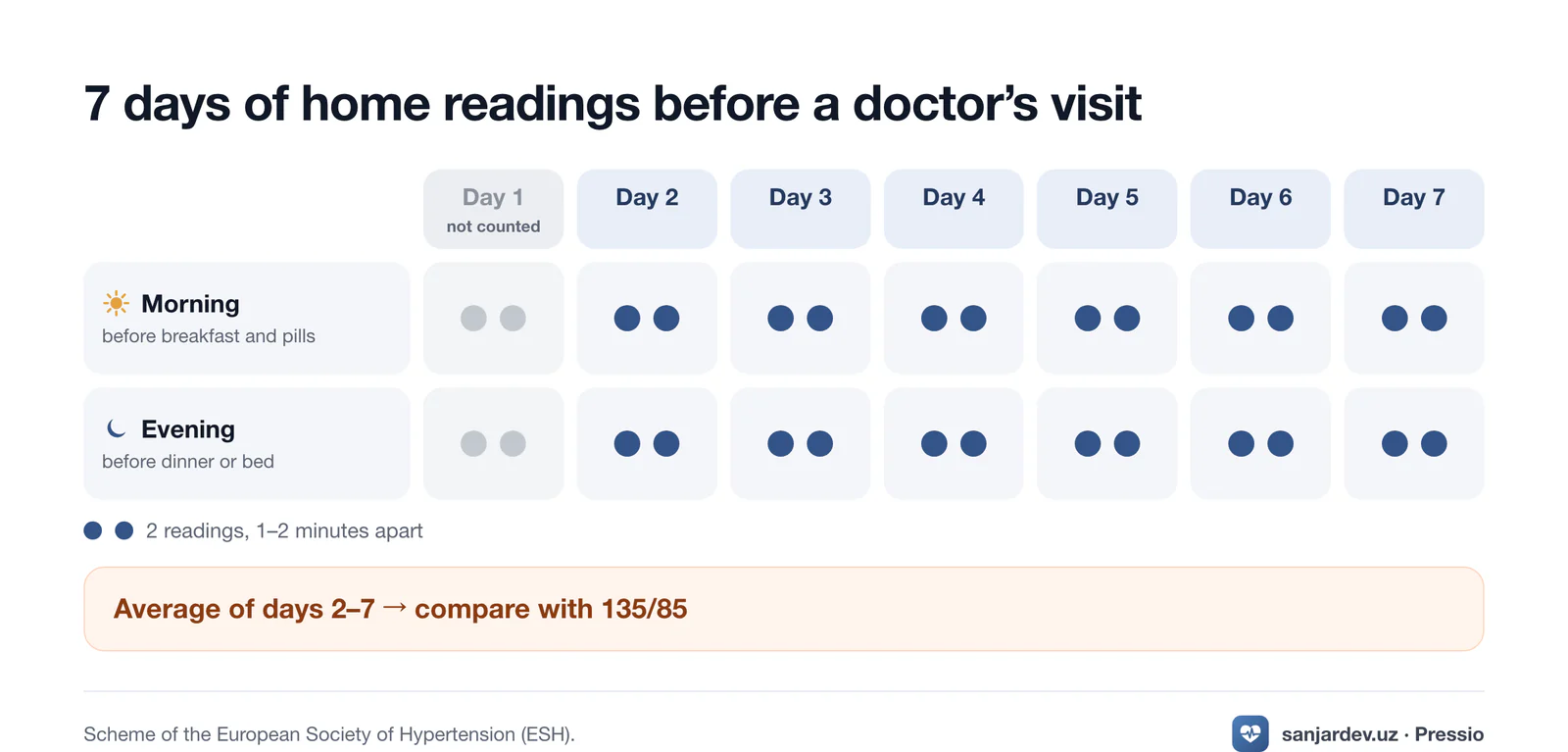
Short answer: measure twice in the morning and twice in the evening. In the morning, do it within an hour of waking up, after the toilet and before breakfast and before your pills. In the evening, before dinner or before going to bed. Take the two readings 1–2 minutes apart, after 5 minutes of rest.
This schedule is recommended by the European Society of Hypertension (ESH), and the American Heart Association (AHA) gives very similar advice. Here is why, and what to do in less typical situations.
Why morning and evening
Blood pressure follows a daily rhythm. It falls during sleep and rises quickly after waking: this morning surge is when heart attacks and strokes happen most often. Morning readings show how high your pressure gets when it is naturally highest, and, if you take pills, how well yesterday’s dose still works.
Evening readings show the other half of the day. Some people are high in the morning and fine in the evening, others the opposite. Your doctor needs both to choose the right medication and the right time to take it.
Before or after a meal
Before. Measure before breakfast and before dinner. After a meal, blood flows to the digestive system and blood pressure can fall, especially in older people — that reading would look better than the truth. If you have already eaten, wait at least 30 minutes, better an hour.
Coffee, strong tea, energy drinks, smoking and exercise work the other way: they raise blood pressure for a while. Avoid them for 30 minutes before measuring.
Before or after your pills
In the morning, measure before taking your blood pressure medication, unless your doctor told you otherwise. This is the moment when the previous dose is at its weakest, so the reading shows whether its effect lasts the whole day.
Never change the dose or the time of your pills because of one reading. If your numbers are consistently high or low, bring your log to your doctor.
How many days
- Before a doctor’s visit or to check a diagnosis: 7 days in a row (at least 3), morning and evening, two readings each time. The first day is left out and the rest are averaged. The result is compared with the home limit of 135/85 (ESH) or 130/80 (AHA/ACC).
- After a change in treatment: a new series a few weeks later shows whether the new dose works. Your doctor will tell you when.
- When everything is stable: your doctor will tell you how often. Often a 7-day series before each visit is enough, with occasional checks in between.
Measuring many times a day, every day, rarely helps: the numbers become a source of worry rather than information.
What to avoid
- Measuring right after waking up in a hurry, before the toilet.
- Measuring in the cold, in pain, when upset or right after climbing stairs.
- Measuring repeatedly until you get a number you like.
- Mixing positions: home readings are taken seated.
How to sit and place the cuff is explained step by step in how to measure blood pressure at home.
Why home readings matter
At the clinic, blood pressure is often higher than at home. This is called the white coat effect. Some people have the opposite — normal readings at the clinic and high ones at home — known as masked hypertension. A week of home readings shows which is true for you.
That is also why the home limit (135/85) is lower than the clinic limit (140/90): the same person, calmer at home, has lower numbers. The full chart is in normal blood pressure by age.
Fasting, night shifts and travel
If your daily routine is unusual, keep the rule “same moments every day”. During a fast, for example, measure at the same times relative to your meals each day, and ask your doctor before changing when you take your pills. If you work night shifts, measure after waking and before your main meal, whatever the clock says. When you travel across time zones, write the local time in your log.
A ready-made schedule
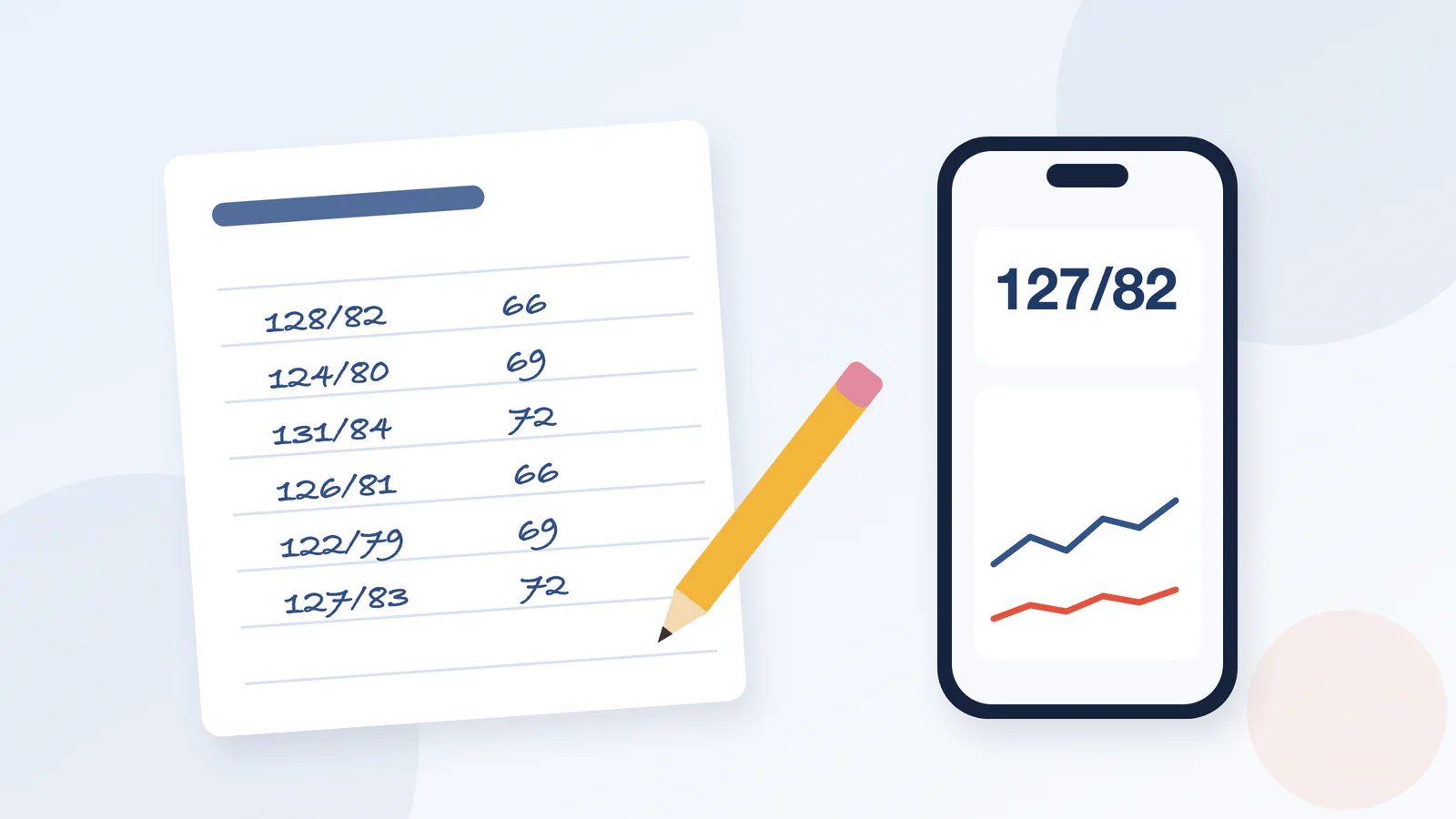
You can print our blood pressure log: the 7-day page has two lines for the morning and two for the evening, and a box for the average.
Or let your phone keep track. In Pressio, the diary we develop for iPhone and Android, morning and evening reminders are offered at the first launch (8:00 and 20:00 by default, you can change the time), and the home screen shows separate morning and evening averages for the last 7 days. The “Before the doctor visit” plan in Pressio Pro follows the ESH scheme: 7 days, two readings morning and evening, day 1 left out and the average compared with 135/85.
Sources
- ESH 2023 Guidelines for the management of arterial hypertension — Journal of Hypertension, 2023
- Measurement of blood pressure in humans: a scientific statement from the AHA — Hypertension, 2019
- 2024 ESC Guidelines for the management of elevated blood pressure and hypertension — European Heart Journal, 2024
Written by Sanjar Jabborov, developer of Pressio. Checked against ESH and AHA recommendations on home blood pressure monitoring. Updated on 13 November 2026. This article is for information only and does not replace advice from a doctor.