Blood Pressure Log: Free Printable Sheet (PDF) and How to Use It
Download a free printable blood pressure log (PDF): a 7-day sheet for your doctor and a monthly log. How to fill it in, calculate the average and read the result.
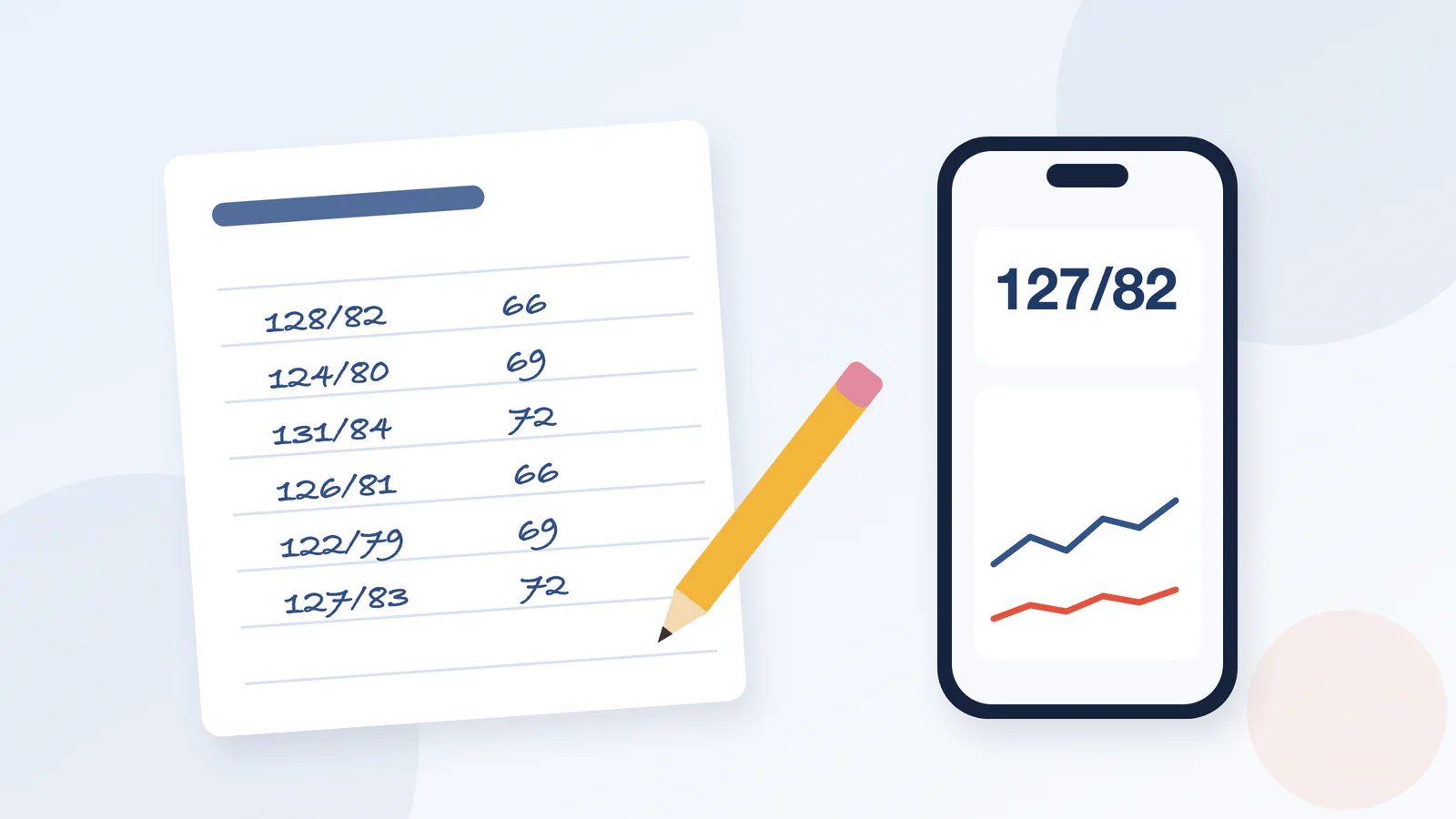
A single reading says little. A week of readings written down properly tells your doctor whether your blood pressure is really high, whether treatment works and whether the morning or the evening is the problem. Below is a free log you can print, and a short guide to filling it in.
Download the log
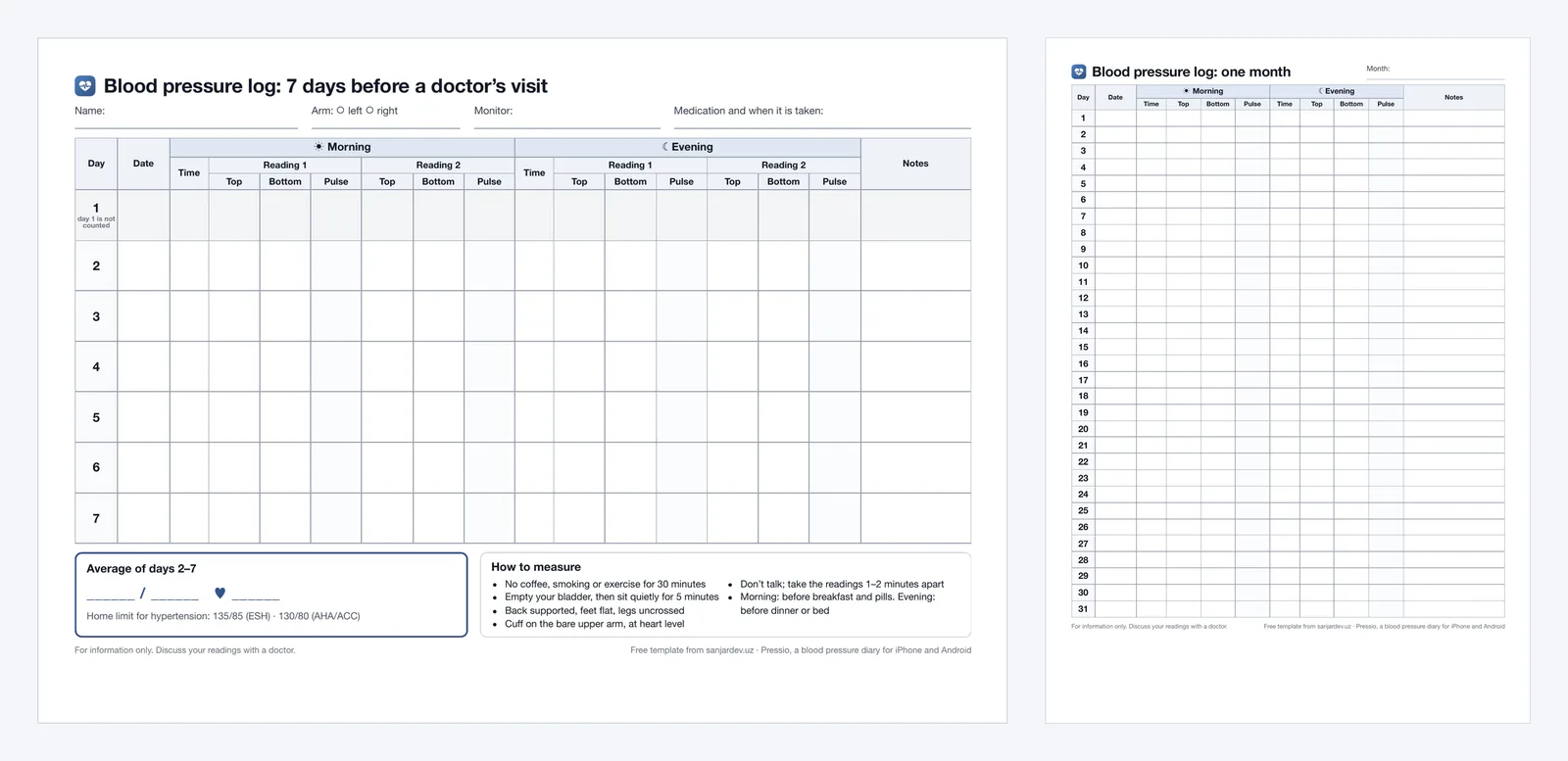
The file has two pages:
- 7-day log before a doctor’s visit: two readings every morning and every evening, with room for the pulse and notes, and a box for the average at the bottom.
- Monthly log: one line per day for regular check-ups when your treatment is stable.
Print as many copies as you need. The log is free and has no conditions.
What to write down
For every reading:
- date and time;
- top number, bottom number and pulse, exactly as the monitor shows them;
- arm (always the same one: the arm that gave the higher reading the first time you compared them);
- notes: when you took your blood pressure pills, symptoms (headache, dizziness), and anything unusual (poor sleep, pain, coffee just before, the “irregular heartbeat” symbol on the monitor).
The notes are often what helps the doctor most: a high reading with “forgot my evening pill” means something different from one with “felt fine”.
How to fill in the 7-day page
This is the scheme recommended by the European Society of Hypertension (ESH) for checking blood pressure at home before a visit:
- 7 days in a row. At least 3 days if 7 are not possible.
- Morning: within an hour after waking up, after the toilet, before breakfast and before your pills.
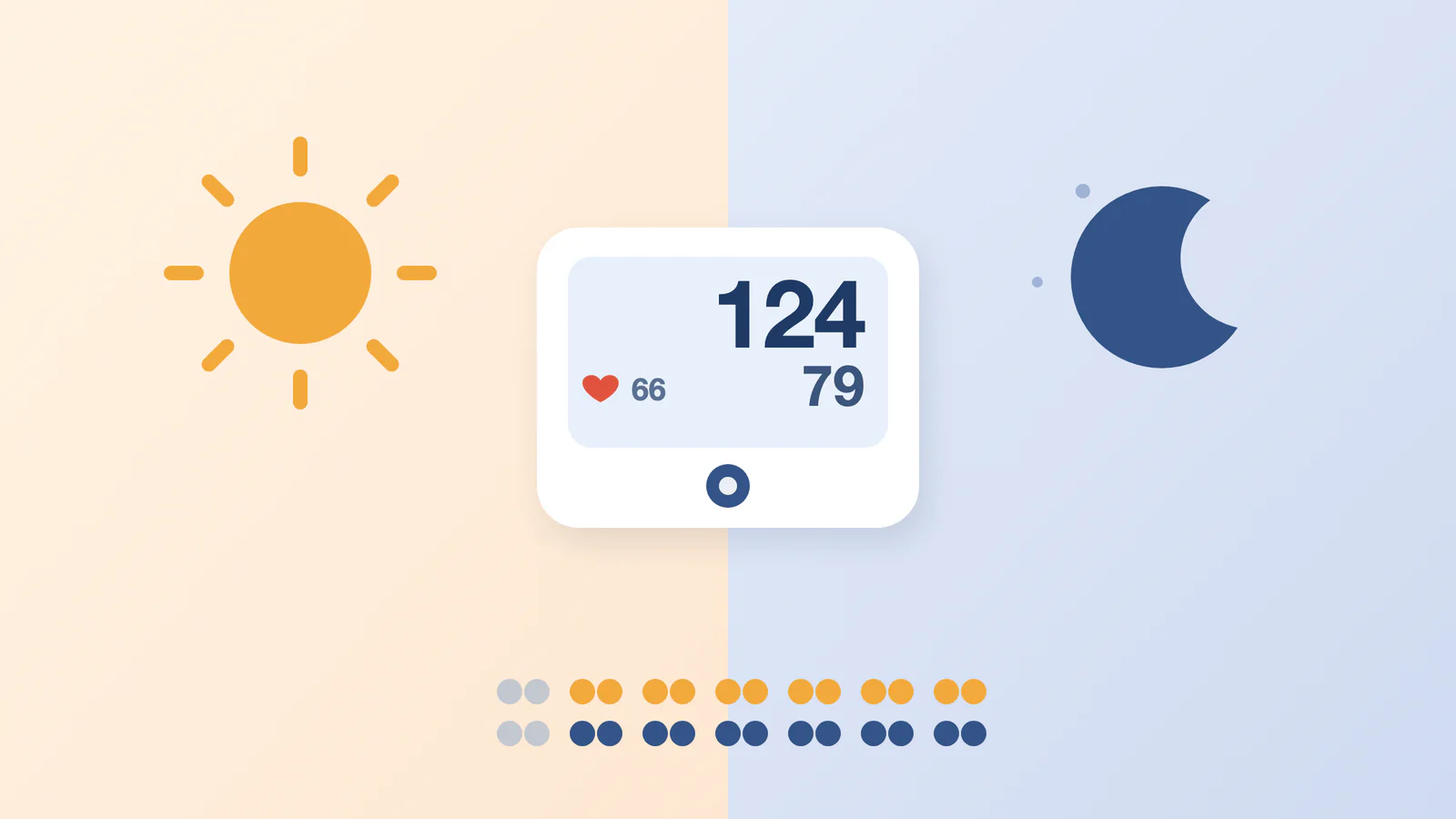
- Evening: before dinner or before going to bed — choose one and keep it the same every day.
- Two readings each time, 1–2 minutes apart, after 5 minutes of sitting quietly.
If you are not sure how to sit and where to put the cuff, read how to measure blood pressure at home first: one mistake can add 10 mmHg or more.
Your doctor may give you a different scheme. In France, for example, the national health authority (HAS) recommends the “rule of 3”: three readings in the morning and three in the evening, three days in a row. Follow your doctor’s instructions. If you are asked for three readings at a time, write the third one in the notes column.
How to calculate the average
- Cross out day 1. On the first day readings are usually higher because measuring is still new and a little exciting. ESH recommends leaving it out.
- Add up all top numbers from days 2–7 and divide by the number of readings. Do the same with the bottom numbers.
- Write the result in the box at the bottom of the page.
Example. Over days 2–7 you have 24 readings. The top numbers add up to 3,264, and 3,264 ÷ 24 = 136. The bottom numbers add up to 2,016, and 2,016 ÷ 24 = 84. The average is 136/84.
What the result means
The home limit for hypertension in European guidelines is 135/85: if the average top number is 135 or more, or the bottom one is 85 or more, the result is at or above the limit. In the example, 136/84 is above it because of the top number. American guidelines use 130/80 for home readings.
An average above the limit is not a diagnosis by itself, but it is a clear reason to show the log to your doctor. An average below it while your clinic readings are high may point to “white coat” hypertension; that also deserves a conversation with the doctor. What the numbers mean in general is explained in normal blood pressure by age.
Don’t wait for the end of the week if a reading is 180/120 or higher — see what to do with blood pressure of 180/120.
Tips that make the log useful
- Keep the sheet next to the monitor and write the numbers immediately. Numbers recalled an hour later are often wrong.
- Don’t erase and don’t skip. If a reading was taken after coffee, write it down with a note rather than hiding it.
- Same arm, same chair, same time. Consistency matters more than perfection.
- Bring the original (or a clear photo) to your appointment, together with your monitor if the doctor wants to check it.
Paper or app?
Paper works perfectly well, and the sheet above is all you need. An app helps when you measure for months: it calculates averages for you, keeps years of readings and makes a report that is easy to send.
That is why we made Pressio, a blood pressure diary for iPhone and Android. The free version keeps the diary, shows morning and evening averages and creates a PDF report for the last 7 days. The guided “Before the doctor visit” plan — 7 days, two readings morning and evening, day 1 left out and the average compared with 135/85 automatically — is part of Pressio Pro. Your readings stay on your phone; there is no account and no advertising.
Sources
- ESH 2023 Guidelines for the management of arterial hypertension — Journal of Hypertension, 2023
- Measurement of blood pressure in humans: a scientific statement from the AHA — Hypertension, 2019
- Prise en charge de l’hypertension artérielle de l’adulte — Haute Autorité de Santé (HAS), France
Written by Sanjar Jabborov, developer of Pressio. Checked against ESH and AHA recommendations on home blood pressure monitoring. Updated on 13 November 2026. This article is for information only and does not replace advice from a doctor.