Blood Pressure 180/120 or Higher: What to Do Right Now
Blood pressure of 180/120, 180/100 or higher? When to call an ambulance, what to do if you feel fine, and what not to do. Based on AHA and ESH advice.
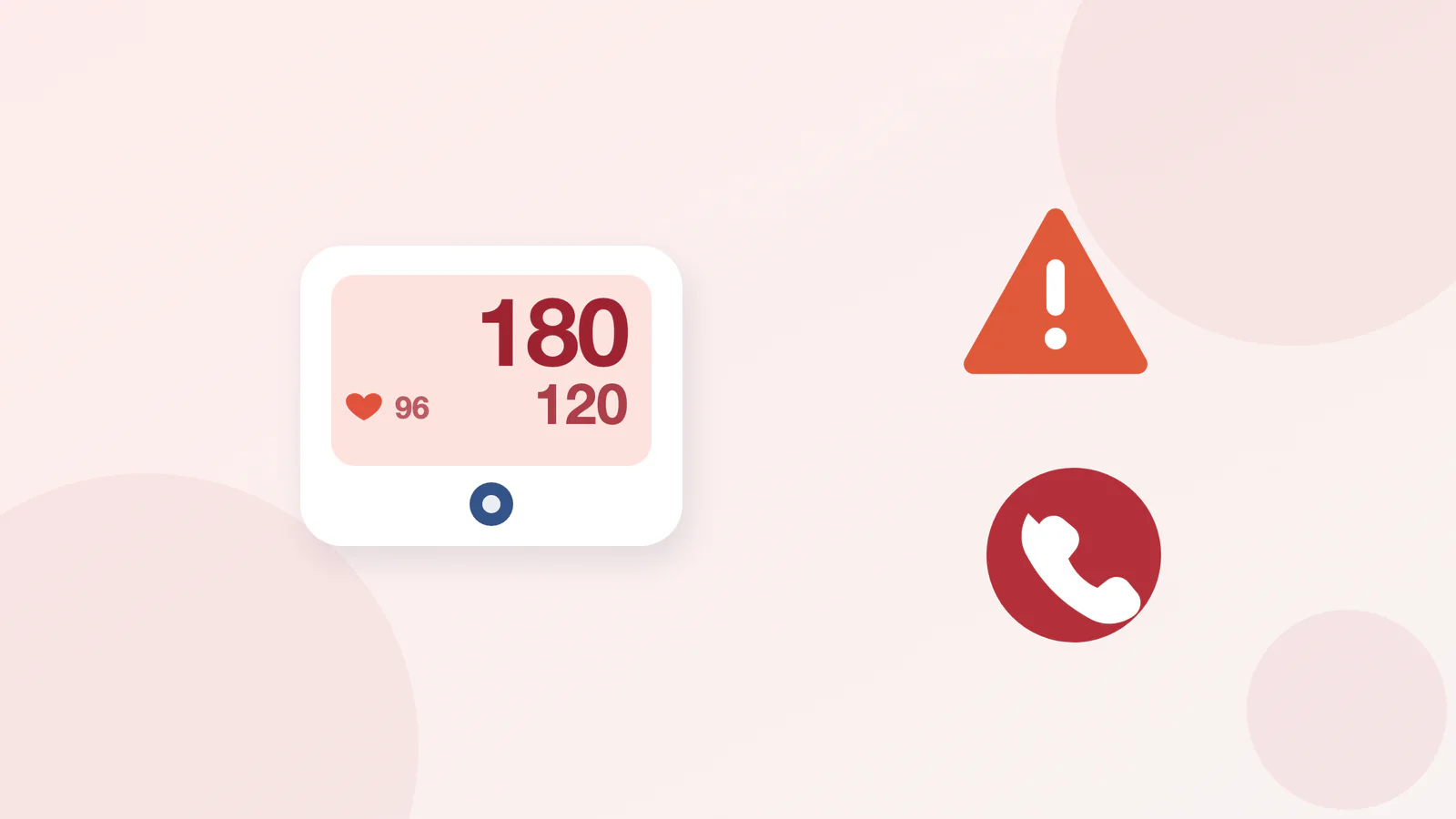
Call your emergency number now if your blood pressure is 180/120 or higher (or just one of the numbers is that high) and you have any of these: chest pain, shortness of breath, back pain, numbness or weakness in the face, an arm or a leg, a change in vision, difficulty speaking, or a severe headache with confusion. Don’t wait to see whether the pressure comes down on its own, and don’t drive yourself.
Emergency numbers: 911 in the US and Canada, 112 in the EU, 999 or 112 in the UK.
If you feel fine, a reading like this is still serious, but you have a few minutes to check it properly. Here is what to do, step by step.
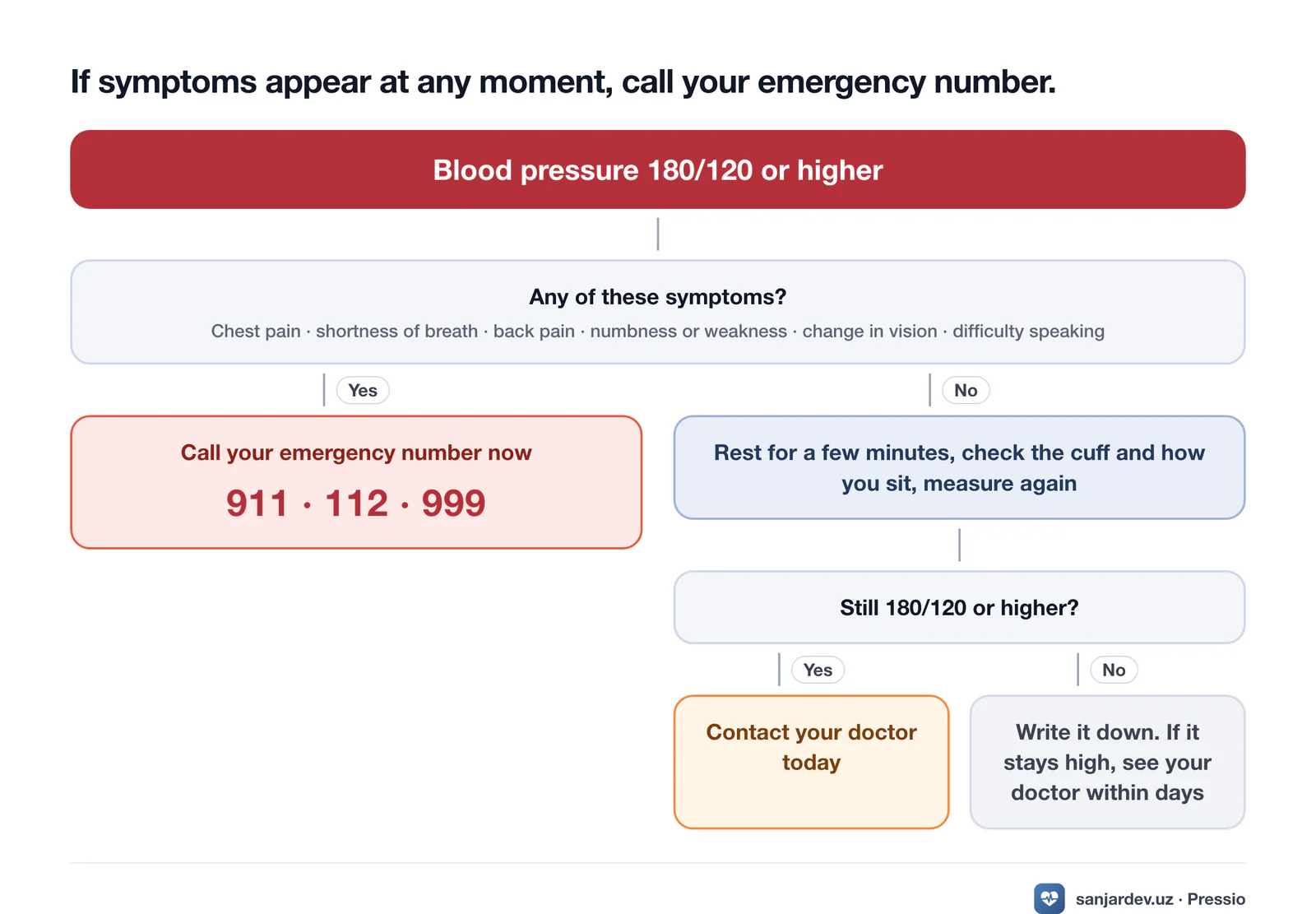
If you have no symptoms
- Sit down and calm down. Rest quietly for a few minutes, with your back supported and your feet on the floor.
- Check how you measured. Is the cuff on a bare arm and the right size? Is the arm resting on a table at heart level? Were you talking? Mistakes like these can add 10–50 mmHg, see how to measure blood pressure at home.
- Measure again. Wait at least 1 minute after the previous reading.
- Still 180/120 or higher? Contact your doctor today. The American Heart Association calls this severe hypertension: it needs medical advice without delay. If you can’t reach your doctor, call an urgent medical advice line or go to an urgent care service.
- If symptoms appear at any moment, call your emergency number.
Write every reading down, together with the time and what happened before it: a missed pill, pain, a cold medicine, a stressful event. This helps the doctor understand the cause.
What not to do
- Don’t take an extra dose or someone else’s pills unless your doctor has given you a plan for exactly this situation. Bringing blood pressure down too fast can be dangerous too, especially for the brain and the heart.
- Don’t measure every few minutes for an hour. Anxiety raises blood pressure, and endless measuring raises anxiety. Two or three careful readings are enough to decide what to do.
- Don’t stop your regular medication on your own, even if the next readings are low.
- Don’t rely on home remedies instead of medical help when the numbers stay this high.
Emergency or urgent: what is the difference
Doctors separate two situations:
- Hypertensive emergency: very high blood pressure with signs that organs are being damaged right now — the heart, the brain, the kidneys, the eyes. That is what the symptoms above point to. It is treated in hospital.
- Severe hypertension without symptoms (it used to be called a “hypertensive urgency”): just as high, but without signs of organ damage. It usually doesn’t need an ambulance, but it does need a doctor soon to adjust the treatment.
Only a doctor can tell the two apart for sure. That is why the rule is simple: high numbers with symptoms — emergency number; high numbers without symptoms — your doctor today.
What about 160/100 or 170/105?
Readings from 160/100 to 179/109 without symptoms are not an emergency, but they should not wait for months either. Measure properly for a few days, write the readings down and contact your doctor within days. In the European classification this range is grade 2 hypertension; the full chart is in normal blood pressure by age.
Common reasons for a sudden jump
- a missed or late dose of blood pressure medication;
- painkillers such as ibuprofen or naproxen, and cold or flu remedies with decongestants (pseudoephedrine, phenylephrine);
- pain, anger, panic, lack of sleep;
- a lot of salt or alcohol the day before;
- measuring mistakes: a small cuff, a cuff over a sleeve, talking.
Knowing the reason doesn’t make a high reading harmless. It helps you and your doctor prevent the next one.
How to make it less likely next time
- Take your medication every day at the same time; a pill box and a reminder help.
- Measure regularly, not only when you feel unwell: a steady record shows trouble early. A printable blood pressure log is enough to start.
- Ask your doctor in advance what to do if your blood pressure goes above a certain number, and write the plan down.
How Pressio helps
If you enter a reading with the top number above 180 or the bottom one above 120 in Pressio, the diary we develop for iPhone and Android, it opens a separate screen: rest for 5 minutes and measure again, the warning signs listed above, and a reminder to contact a doctor even if you feel fine. Your readings, the notes about missed pills and the morning and evening averages go into the PDF report for your doctor. Pressio does not measure blood pressure and does not replace medical care: in an emergency, call your emergency number.
Sources
- When to call 911 about high blood pressure — American Heart Association
- 2025 AHA/ACC High Blood Pressure Guideline: top things to know — American Heart Association
- ESH 2023 Guidelines for the management of arterial hypertension — Journal of Hypertension, 2023
Written by Sanjar Jabborov, developer of Pressio. Checked against AHA and ESH recommendations. Updated on 13 November 2026. This article is for information only and does not replace advice from a doctor. In an emergency, call your local emergency number.