How to Check Blood Sugar with a Glucometer: Step by Step
How to check your blood sugar at home with a glucometer: washing hands, which finger, first or second drop, test strips, accuracy, and why watches can’t measure glucose.
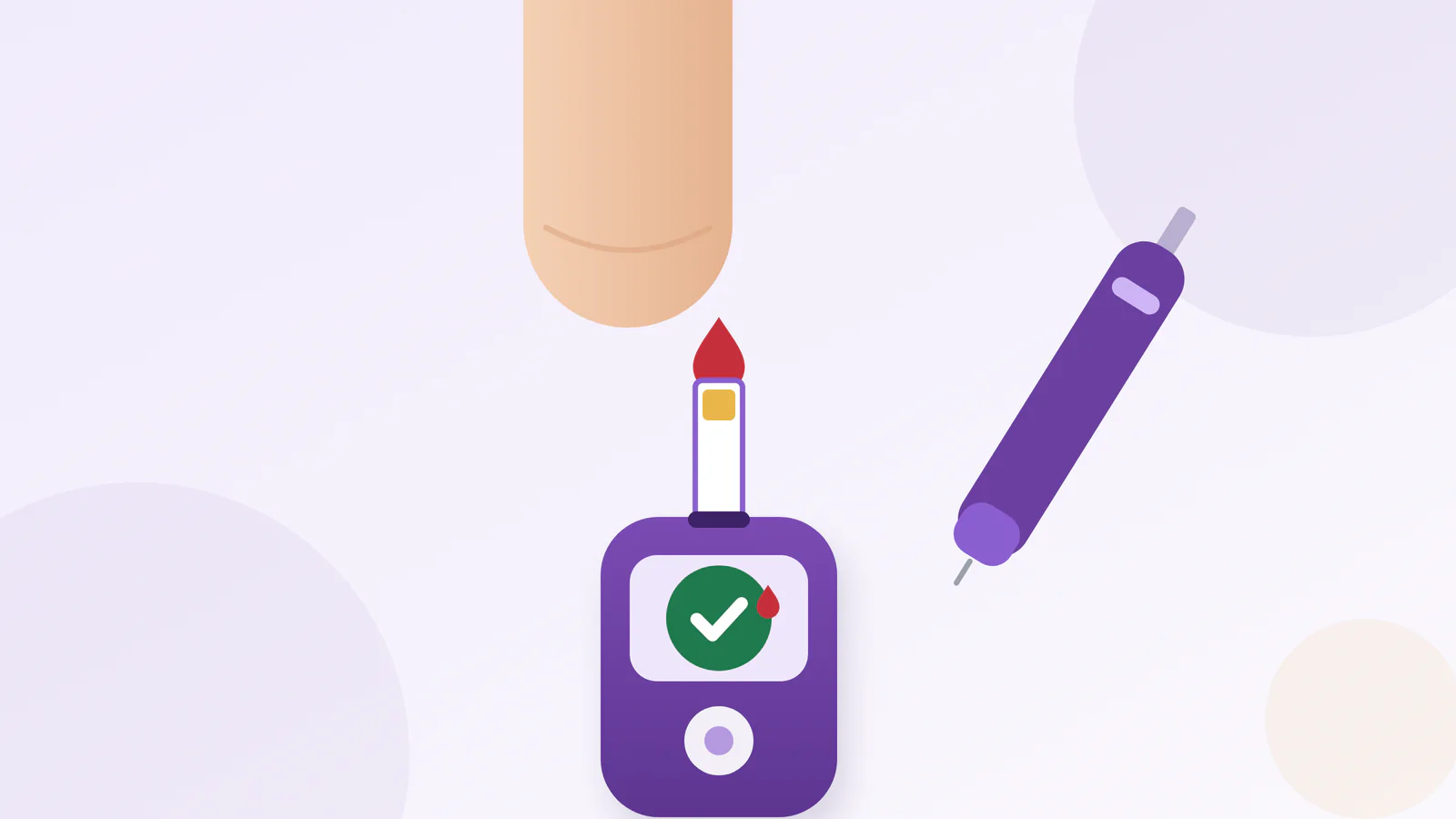
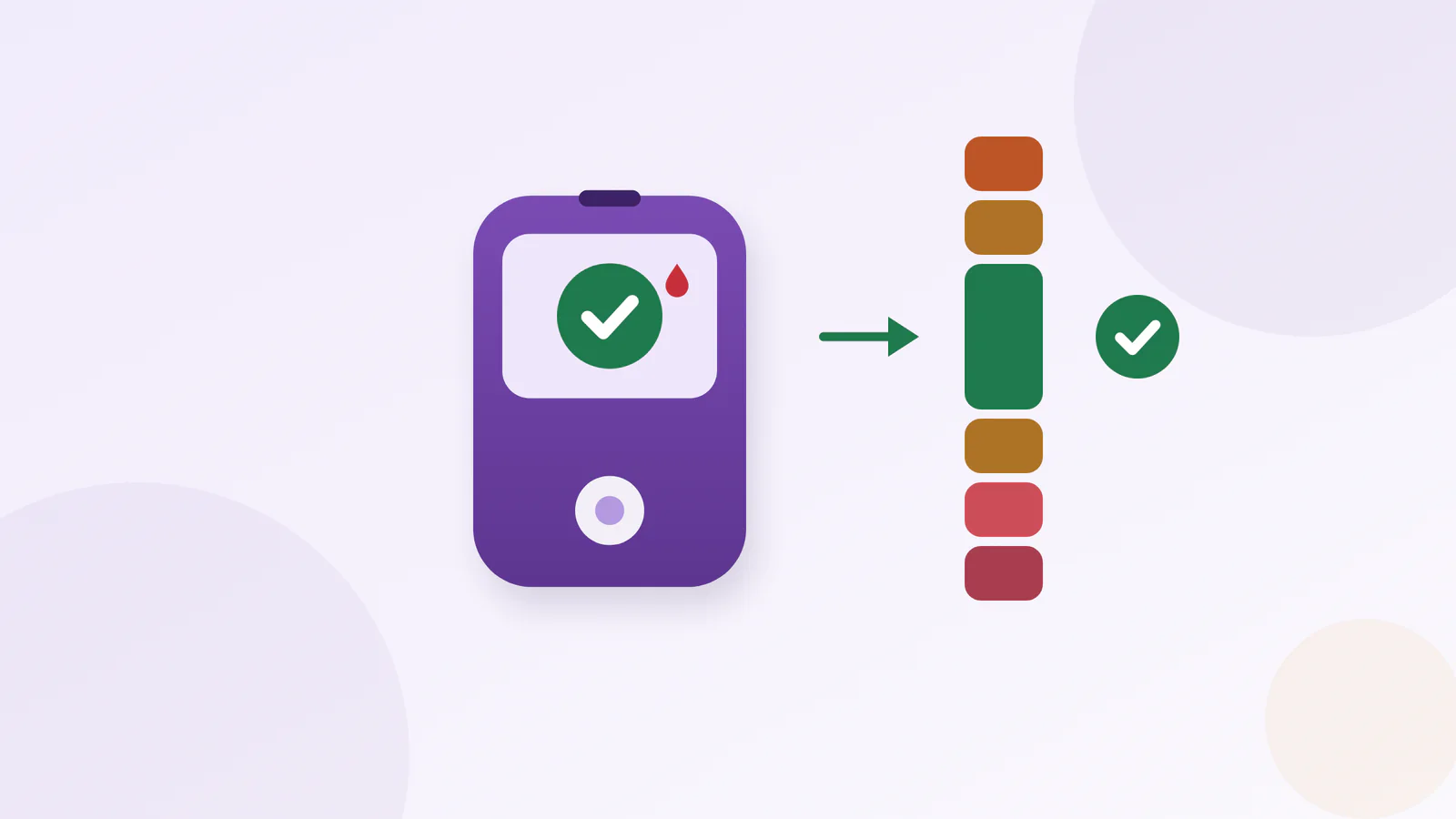
A glucometer gives a result in a few seconds, but the result depends on what happens before: a trace of fruit on the finger can push it up by a lot, an old test strip can push it in either direction. Here is how to measure so that the number reflects your real blood sugar.
What you need
- A glucometer and test strips made for it. Strips from another model do not work and can give wrong results. Modern meters must meet the international standard ISO 15197:2013: at least 95% of results within 15 mg/dL (0.83 mmol/L) of the laboratory value when glucose is below 100 mg/dL (5.6 mmol/L), and within 15% above that.
- A lancing device and new lancets.
- Somewhere to write the result: a paper log or an app.
Before the first use, check the unit on the screen: mg/dL or mmol/L. A meter set to the wrong unit is a common source of confusion when you compare numbers with a doctor’s targets.
Step by step
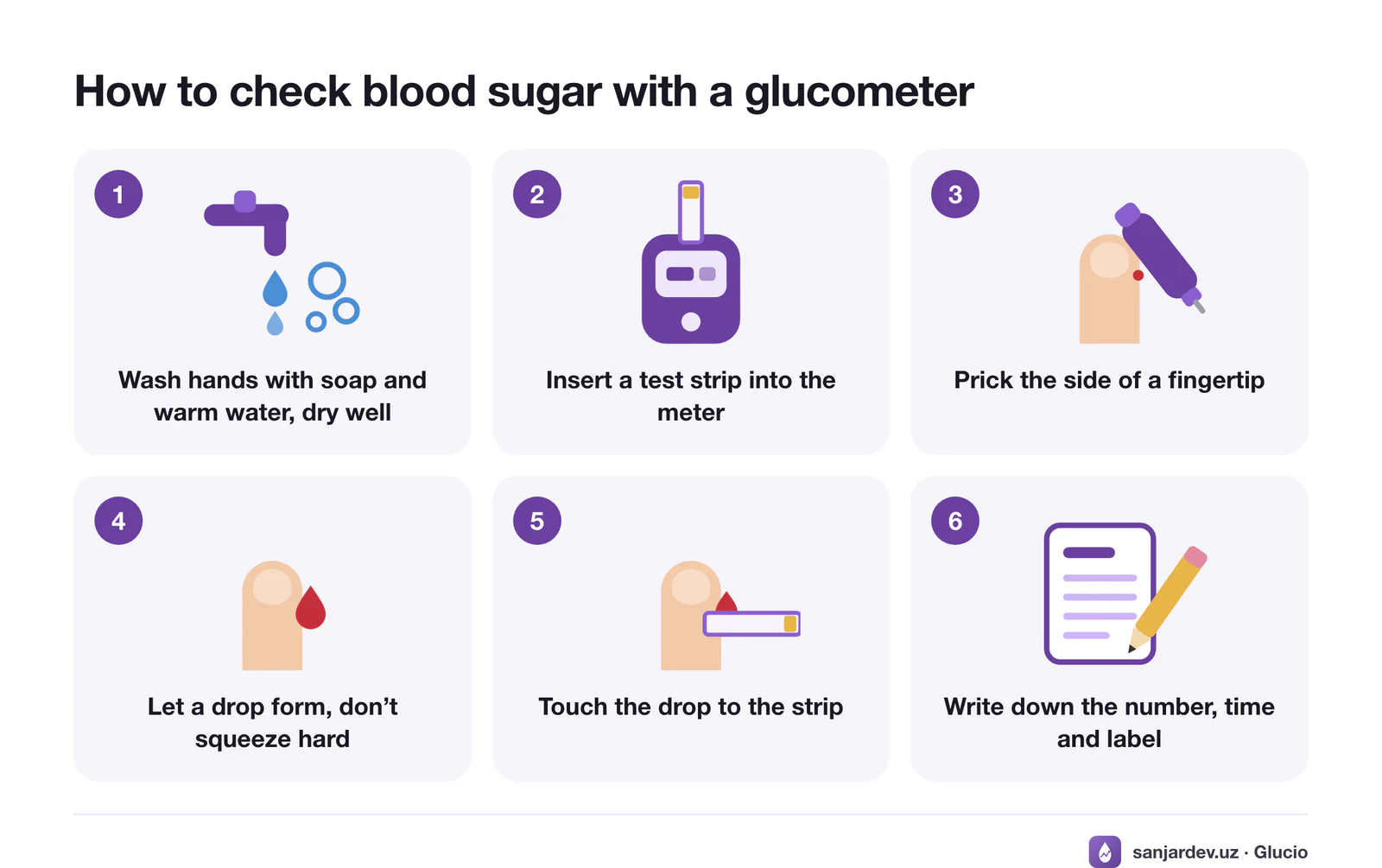
- Wash your hands with soap and warm water and dry them well. This is the most important step: sugar from food on the skin raises the result, and water dilutes the drop. Warm water also brings blood to the fingertips.
- Prepare the meter: insert a test strip, check that the strips are not expired and that the container was closed.
- Prick the side of a fingertip, not the pad: the sides have fewer nerve endings, so it hurts less. Change fingers from time to time. Use a new lancet each time.
- Let a drop form without squeezing hard. Strong squeezing pushes tissue fluid into the drop and can make the result lower. If the drop is too small, hang your hand down for a few seconds or massage the finger from its base toward the tip.
- Touch the drop to the edge of the strip and wait for the result.
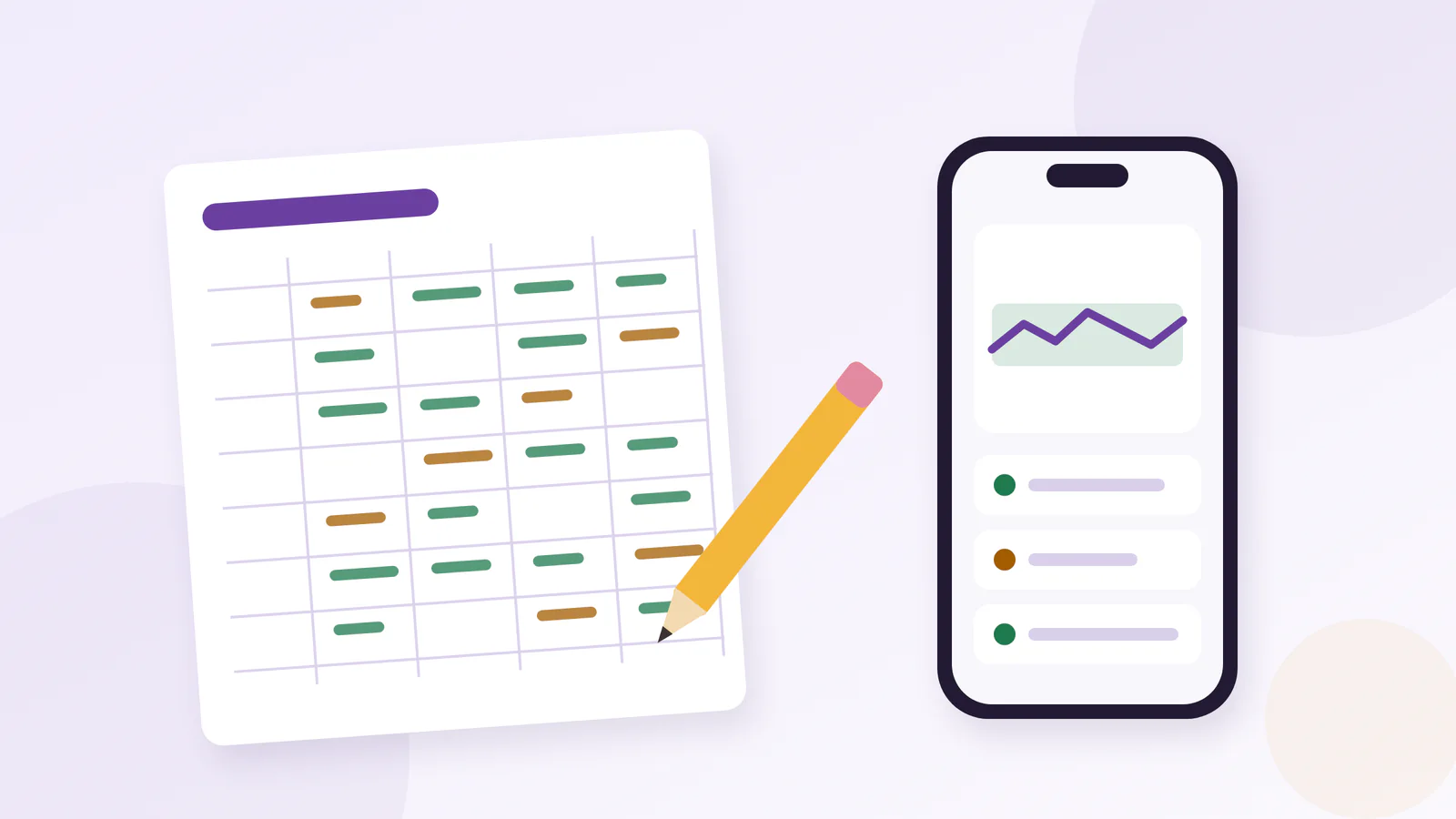
- Write it down at once, with the time and a label: fasting, before a meal, after a meal, bedtime.
First or second drop? If you have washed and dried your hands, use the first drop. If you cannot wash your hands and they are not visibly dirty, wipe away the first drop and use the second one. Alcohol wipes are not needed at home; if you use one, let the skin dry completely before pricking.
8 mistakes that change the result
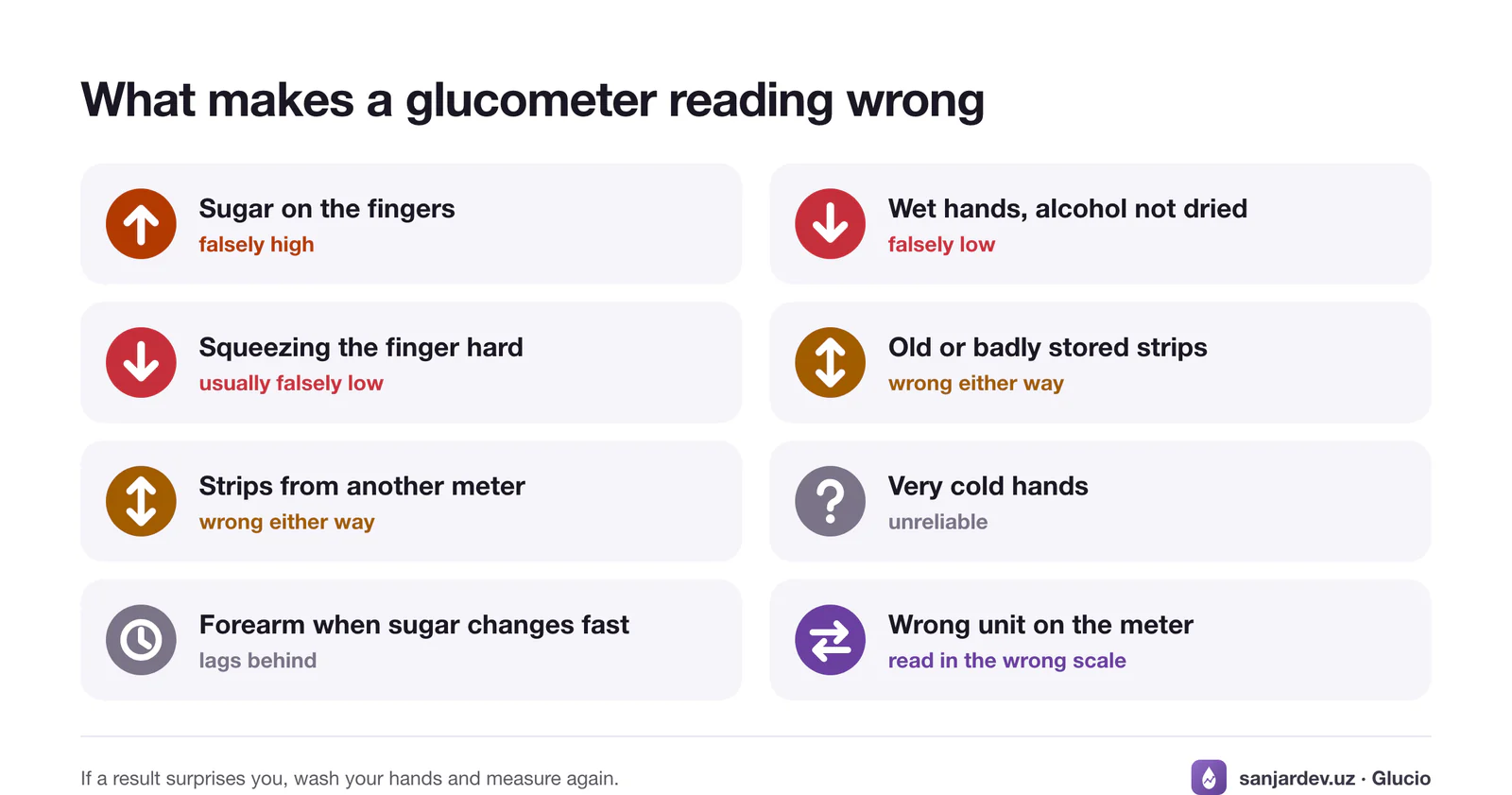
| Mistake | What happens |
|---|---|
| Sugar on the fingers (fruit, sweets, juice) | falsely high, sometimes very high |
| Wet hands or alcohol not dried | the drop is diluted, falsely low |
| Squeezing the finger hard | tissue fluid in the drop, usually falsely low |
| Strips expired, stored open, in heat or humidity | wrong in either direction |
| Strips from another model or a wrong code | wrong in either direction |
| Very cold hands | too small a drop, unreliable result |
| Testing on the forearm or palm when sugar is changing fast | the number lags behind the fingertip |
| Meter set to the wrong unit | the right number read in the wrong scale |
If a result surprises you and you feel fine, wash your hands and measure again before doing anything else.
How accurate is a home glucometer?
Two meters, or one meter and a laboratory test taken at the same moment, rarely show exactly the same number. A difference of up to 15% is allowed by the standard. That is accurate enough to follow your blood sugar and spot lows and highs, but a diagnosis of diabetes is made from laboratory tests.
To check your meter, bring it to a laboratory blood test and measure from a fingertip right after the blood draw. Many meters also come with a control solution: a test with it shows whether the meter and the strips work correctly.
Can you check blood sugar without pricking a finger?
- Continuous glucose monitors (CGM) measure glucose in the fluid under the skin through a thin filament that stays in the skin for one to two weeks. They are approved medical devices; ask your doctor whether one is right for you.
- Smartwatches, rings and phone apps that promise to measure blood sugar without piercing the skin do not work reliably. In 2024 the U.S. Food and Drug Administration (FDA) warned people not to use them: no such device has been authorized, and wrong numbers can lead to wrong doses of medicine.
How often to check
It depends on your treatment. People on insulin usually measure several times a day; people with type 2 diabetes who are not on insulin often measure less, for example in a structured series of readings before a visit. Your doctor will tell you how often. When to measure during the day is explained in our printable blood sugar log, and what the numbers mean is in normal blood sugar levels.
How Glucio helps
In Glucio, the diary we develop for iPhone and Android, you type the number from your meter on a large keypad in your unit, and Glucio suggests the label by time of day and your last reading. After a reading before a meal it offers to remind you to measure after the meal. If your meter shows LO or HI instead of a number, write that in the comment: Glucio accepts only values within the range of a usual meter. Glucio does not measure blood sugar: you measure it with your meter, the way described above.
Sources
- Self-monitoring of blood glucose: the use of the first or the second drop of blood — Diabetes Care, 2011
- FDA warns against using smartwatches or smart rings to measure blood glucose — U.S. Food and Drug Administration, 2024
- ISO 15197:2013: requirements for blood-glucose monitoring systems for self-testing — International Organization for Standardization
- Standards of Care in Diabetes—2026, Section 7: Diabetes Technology — American Diabetes Association
Written by Sanjar Jabborov, developer of Glucio. Checked against ADA recommendations and the ISO 15197 standard. Updated on 13 November 2026. This article is for information only and does not replace advice from a doctor.